





Servicii
Protectie la foc structuri metalice și industriale
ce este inseamna protectia pasiva la foc a structurilor metalice, industriale?
Protecția structurii și compartimentarea anti-foc Structura clădirii necesită măsuri de protecție pasivă anti-incendiu în scopul conservării capacității portante în situația în care are loc declanșarea unui incendiu. Coneco îți pune la dispoziție un portofoliu complet de soluții ingenioase privind protejarea structurii portante, cu respectarea prevederilor normative și a criteriilor estetice.
- Vopsea termospumantă
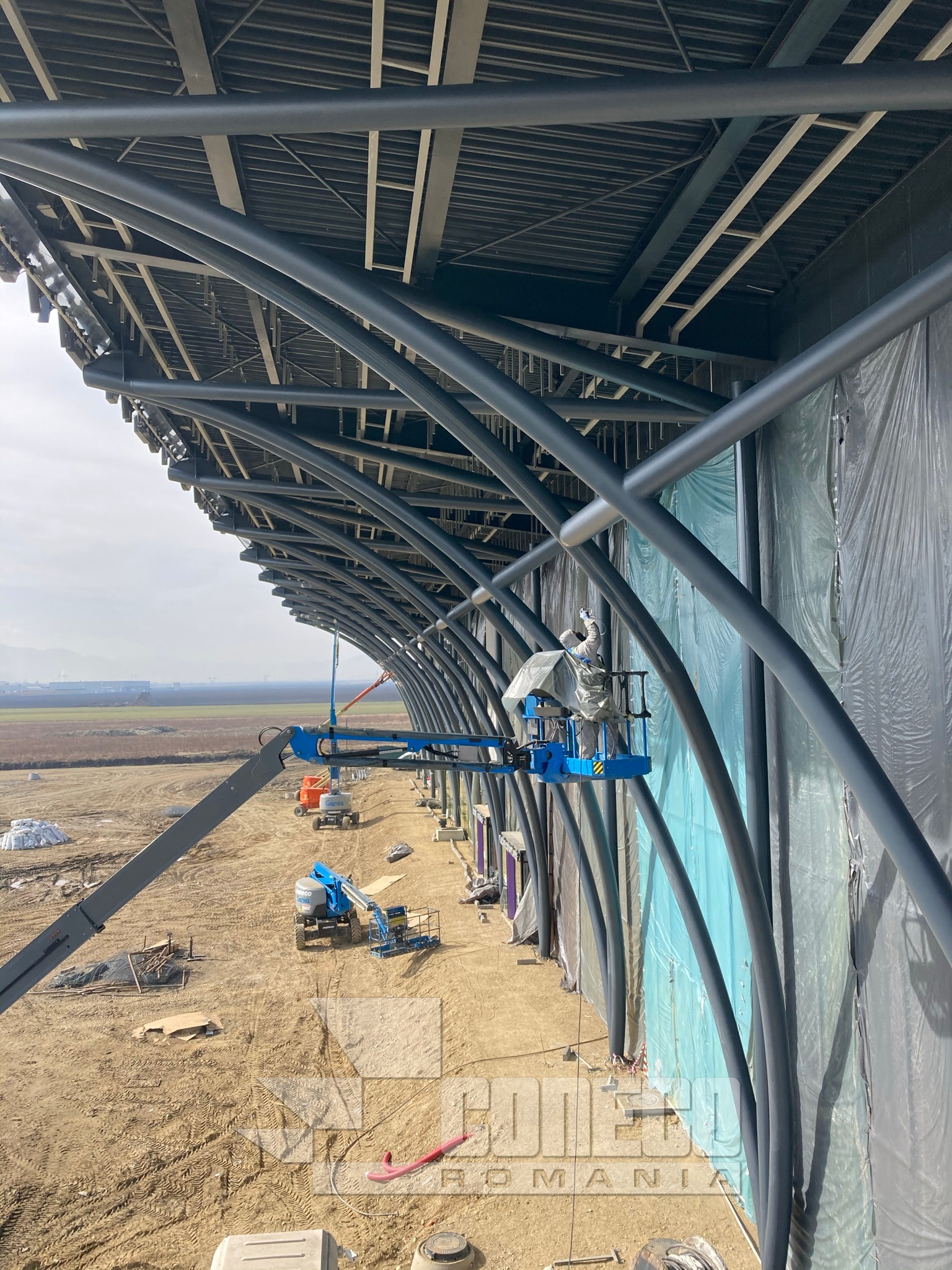
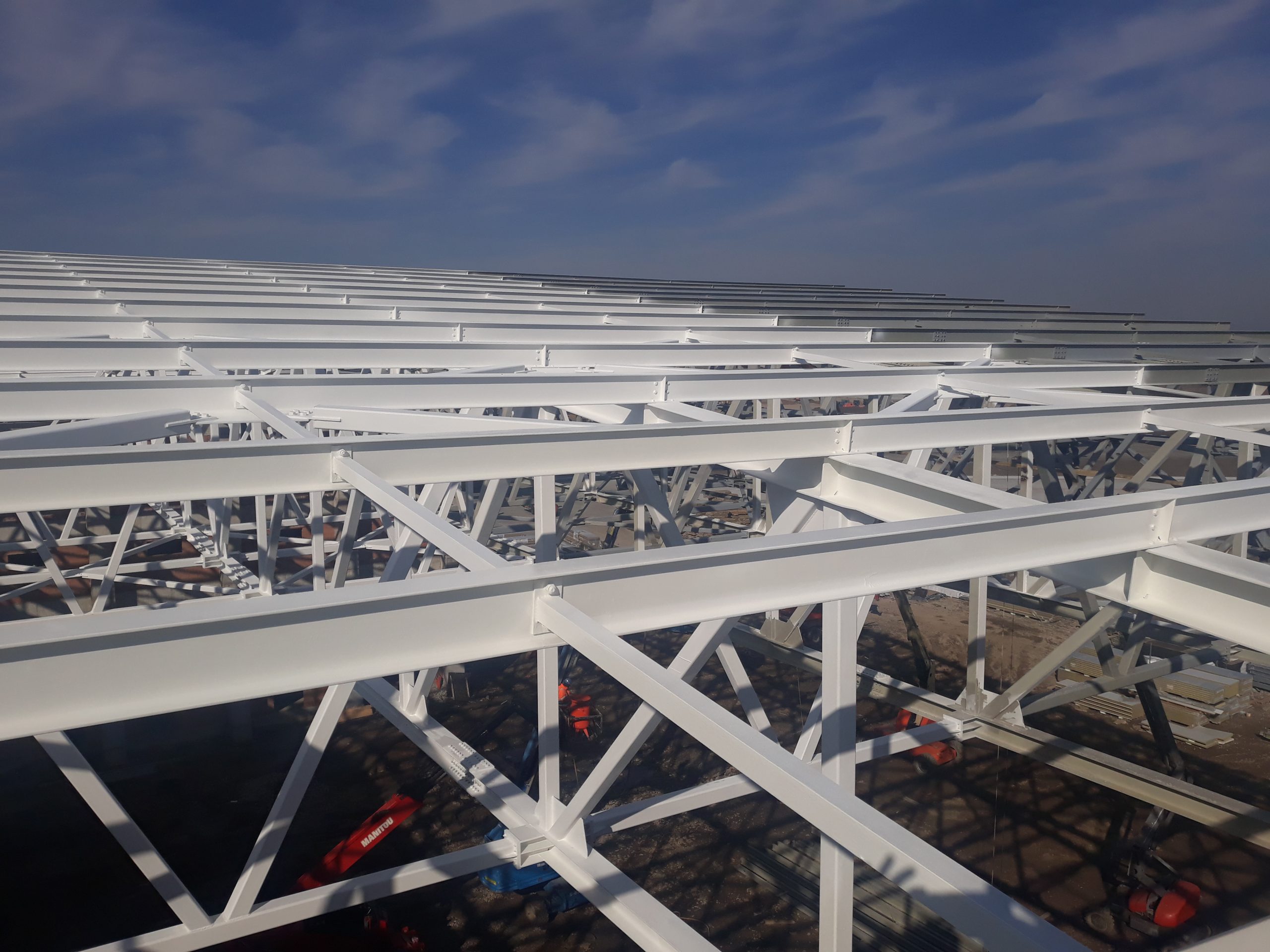
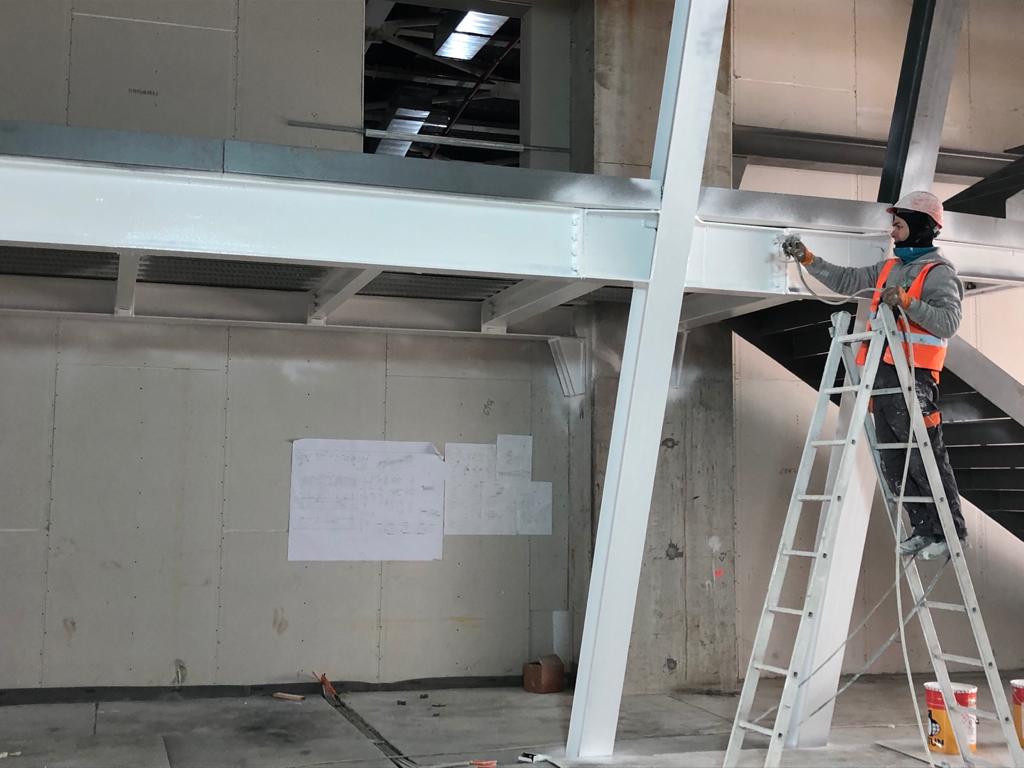
Vopseaua termospumantă garantează protecția anti-foc a structurilor metalice interioare și exterioare, pe o durată de 30-180 de minute. Acest produs se aplică precum vopselele standard, însă, când izbucnește incendiul și temperaturile depășesc 150 de grade Celsius, se formează o spumă izolatoare. Aceasta blochează pătrunderea căldurii în structura metalică pentru o durată specifică.
- Vopsea ignifugă
Aplicarea unor vopseluri ignifuge optimizează comportamentul la foc a materialelor combustibile, precum lemnul, textilele, etc. Vopseaua ignifugă are calitatea de a limita acțiunea flăcărilor, sau poate prelungi faza de ardere lentă, pentru a fi posibilă intervenția în timp real a echipelor de stingere a incendiilor, înainte ca flăcările să pericliteze structura de rezistență a clădirii și bunurile din interior.
- Montare uși anti-foc
Finisează proiectul de protecție a clădirii cu uși anti-incendiu pentru realizarea proiectului de compartimentare, care blochează acțiunea flăcărilor și asigură oamenilor accesul către exterior. Montarea ușilor pentru protectie foc se numără printre măsurile impuse de normele privind siguranța publică ce vizează spațiile comerciale, clădirile de birouri, depozitele de produse inflamabile, etc. Ușile anti-foc sunt concepute special pentru limitarea extinderii focului pentru un interval de aproximativ 60-120 de minute.
- Etanșare
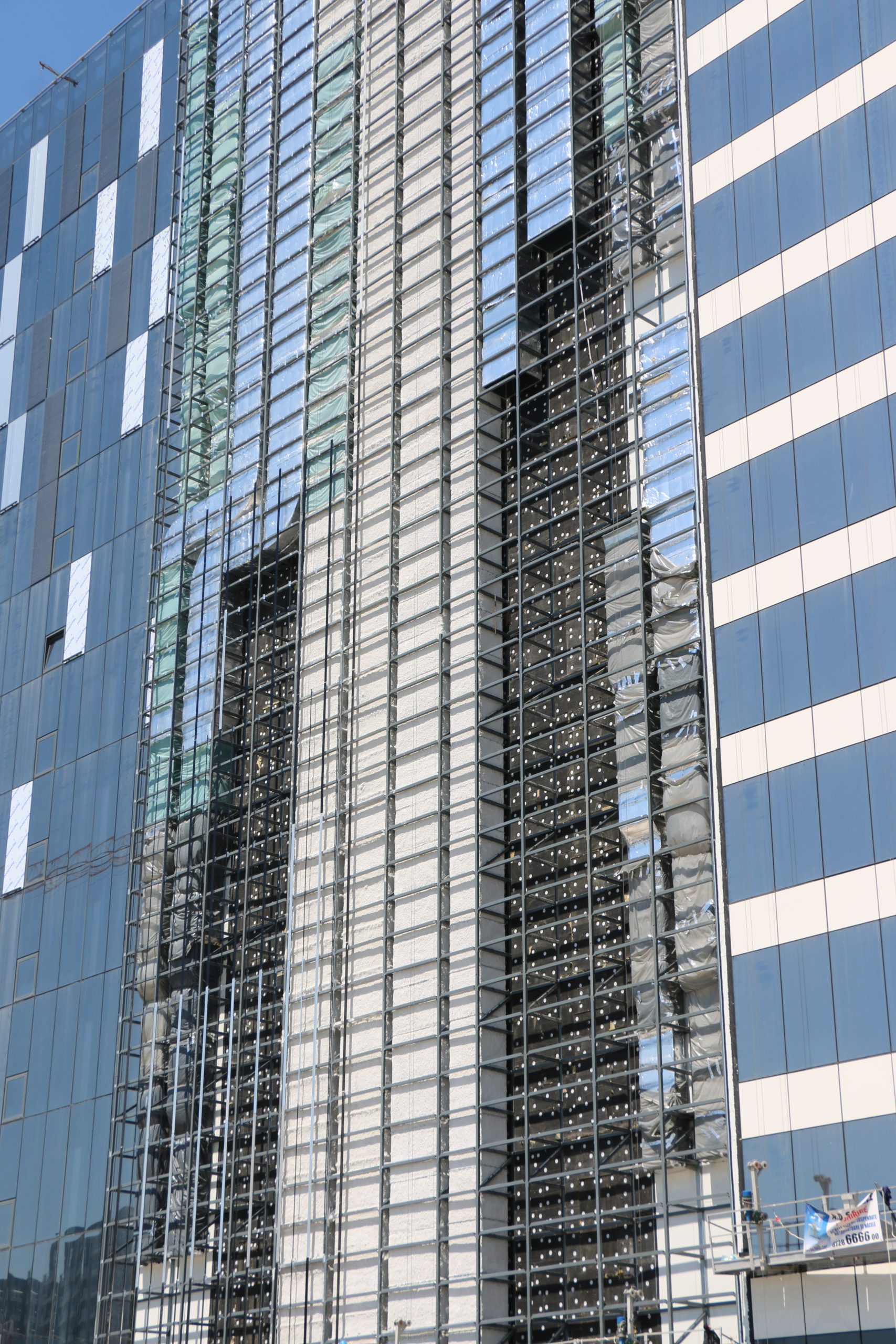
Compartimentarea este o măsură esențială pentru limitarea extinderii incendiului și a daunelor materiale și umane în întregul imobil. Etanșarea golurilor de trecere pentru cabluri, conducte și țevi reprezintă o măsură indispensabilă pentru siguranța compartimentului. În situația unui incendiu, materialele cu proprietăți izolatoare previn extinderea incendiului, reducând în acest mod pierderile umane și materiale.
- securitate incendii cu Coneco
Echipa noastră de asistență tehnică este pregătită să facă față oricăror întrebări, curiozități, sau nelămuriri adresate de clienți. Dacă ai nevoie de sfaturi și sugestii de specialitate, nu ezita să contactezi echipa Coneco pentru a primi informațiile complete care să te îndrume către alegeri potrivite pentru rezultate de durată. .
-
- protectie la foc
- choice.ro, ropaintsolution, prompt, macostore
- Coneco
Cele mai efficiente soluté de protection la foc din România, protejează structura împotriva incendiilor


Proiecte










Publicatii
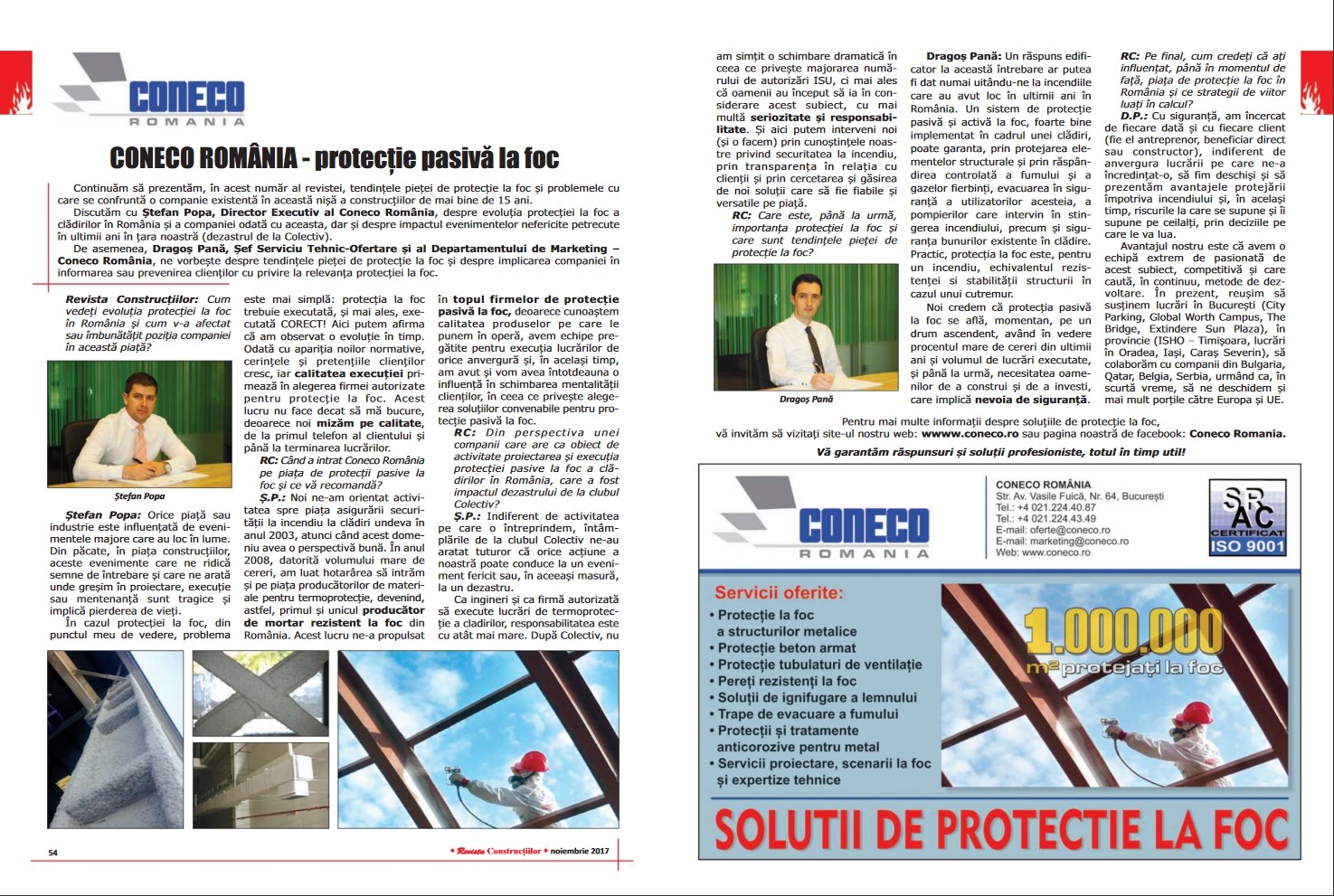
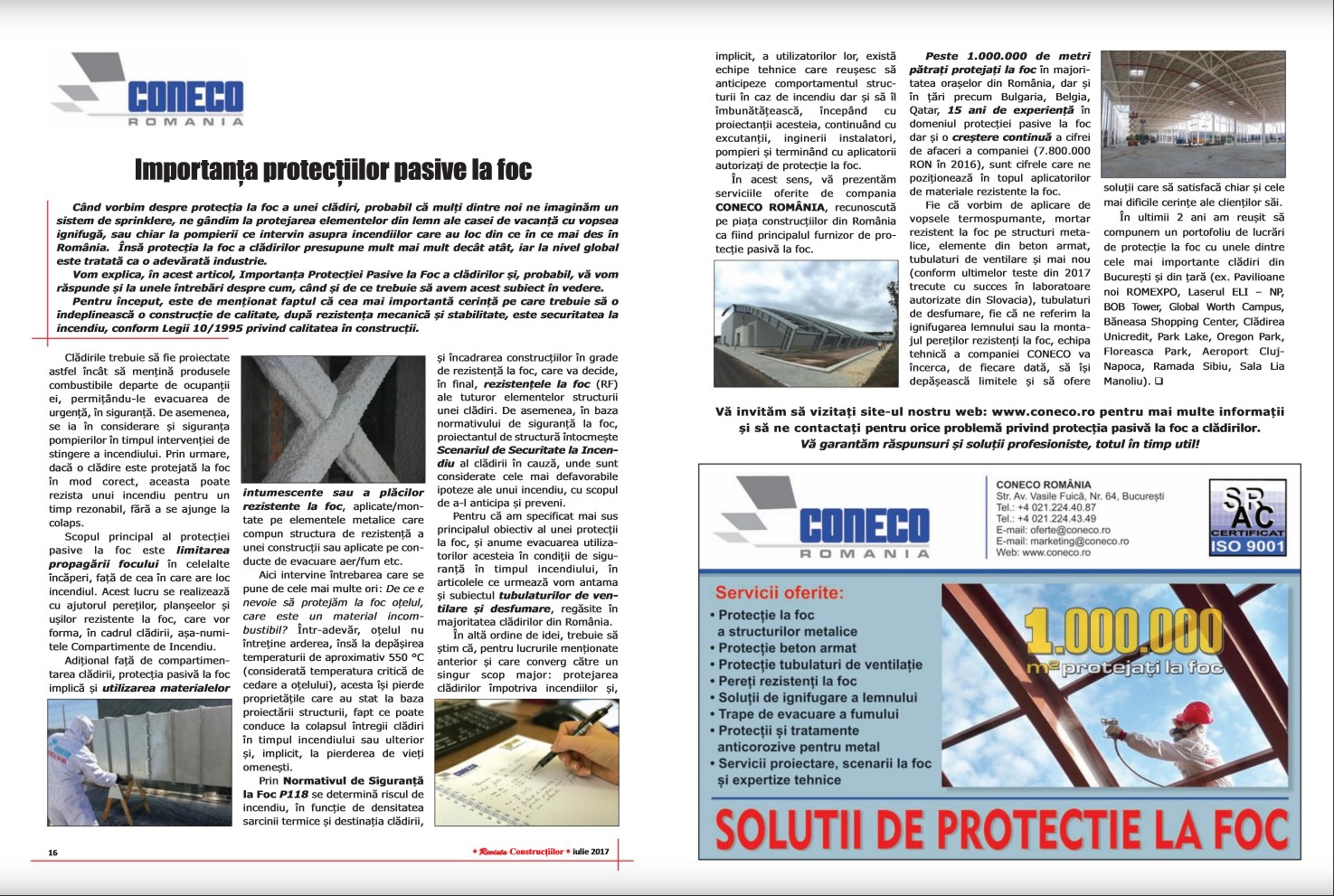
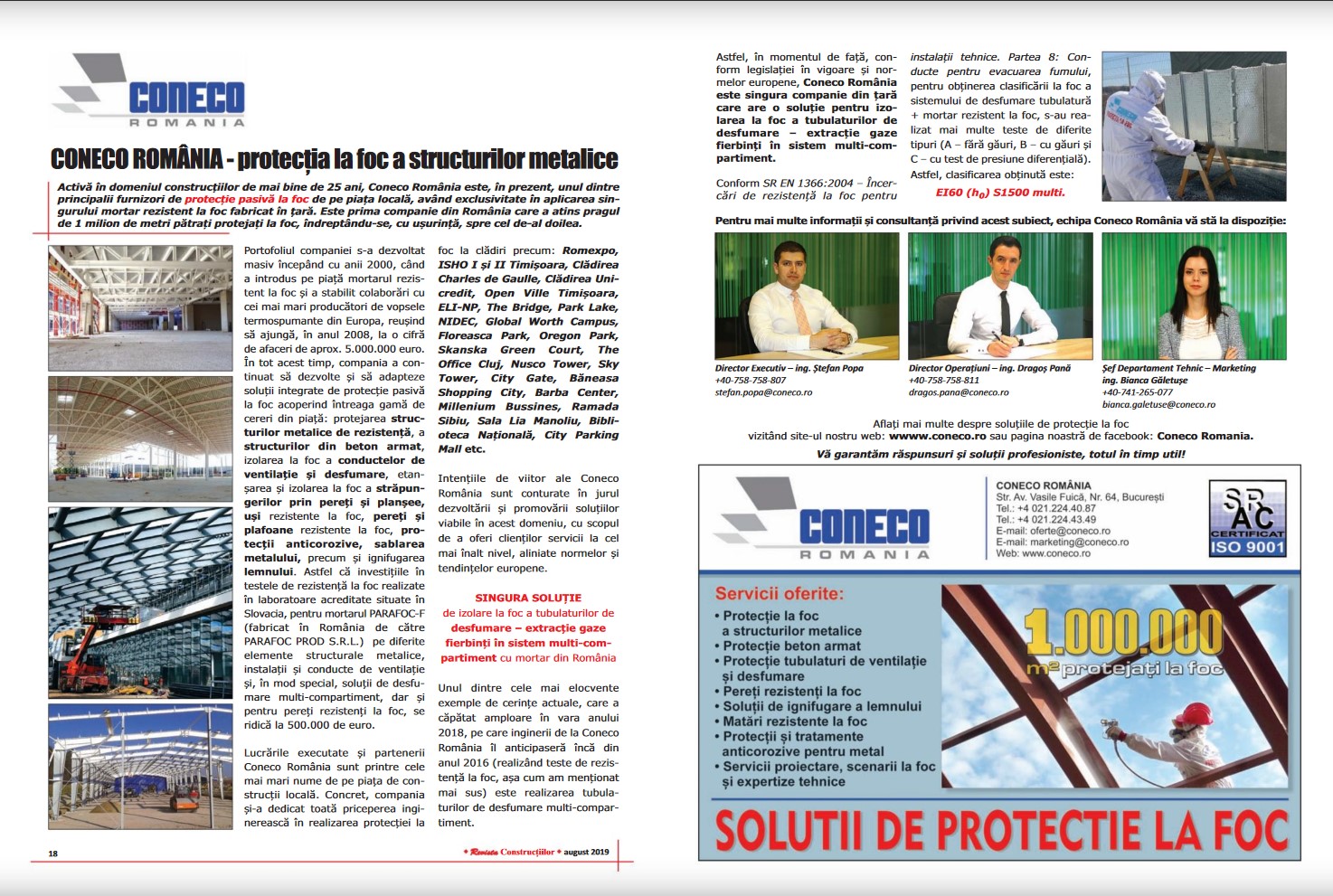


Finalizate
Proiecte
Multumiti
Clienti
implicati
Oameni
activitate